Leaving

As another school year comes to a close, I always love going through some of the different papers and writing projects that I created throughout the year, not just from this semester. In the fall of 2018, I enrolled in an Intro to Creative Writing class, which was required for my minor, and I remember being so nervous for it, for I had never really considered myself a “writer” – I didn’t write poems daily, I really only tried my hand at short stories, and I only ever completed writings for classes, never for fun.

But that creative writing class put my brain to work. We kept a daily journal where we were able to write down everything and anything that came to mind – and it was in these writing exercises when I came up with my short story, titled “Leaving.” This story is a little vignette into Rachel’s internal battle between the seemingly perfect life with her current fiancé and the life she had with her previous boyfriend, Andrew, whom readers know little to nothing about, other than the fact that he still has a hold on her.

I don’t know what it was about them, but Rachel, Sebastian, and Andrew couldn’t leave my mind. Their story about unfinished love and comfortable relationships really kept me fixed to their world, and I knew that I wasn’t quite done with what they had to tell me.

Spring 2019 arrived, and in my Writing for Digital Media class, I decided to put their story off while focusing more time on this blog, The Mod, which helped to cultivate my personal interests with the digital focus of the class. For the final project, however, we needed to create a digital narrative that incorporated several different media techniques that we studied and practiced for class projects (such projects that can be found on my blog here).

This project was the perfect opportunity for me to reinvent the static, five-page analog story that I whipped up last semester. The characters were there, the story line was there, but I wanted (and was required) to spice it up a little with hypertext, photos, location-based features, and a sense of collaboration from others.

When deciding the type of digital realm that I wanted to host “Leaving” with, the easiest way I could think of sharing this story included creating another blog. The blog posts could easily incorporate some of those aforementioned digital features, and after discussing how to plan the story out with my professor, we realized that this blog could be Rachel’s personal space where she documents everything she is going through, which also helps to make a timeline of events by backdating the posts.

Setting up the blog was easy enough, since I already knew how to navigate WordPress. Trying to incorporate the location-based feature, though, threw me for a loop at first, since I didn’t know how to separate my posts from one another (or how to make these sections stand alone).

After maneuvering with the custom theme settings, though, a light bulb flicked on over my head – I would tag the posts with the location I wanted them in. For Andrew, his story line would be in Philadelphia, so every time I wrote about him, I would first backdate the post and then incorporate the “philadelphia” tag. After fiddling with the settings, I thus created a tab on the menu bar that organized every post with the corresponding tag. The same thing then occurred with the posts focusing on Sebastian.

The location-based menu tabs helped to organize Andrew and Sebastian’s stories, along with the addition of an advice column.

Part of that ingenious hack, if I do say so myself, actually came from Vogue’s website (if you haven’t realized by now, I spend a lot of time on that site – but I digress). At the end of all of their posts, it has an “In This Story” feature that basically takes the main keywords from that article and hyperlinks it to a page that shows more articles with the same keywords. Once I realized that what Vogue was doing basically organization by tags, I knew that I could do the same with my interactive blog.

“In This Story” from Vogue was the inspiration for the location-based narrative tags in my interactive fiction piece.

Creating the stories themselves didn’t take much effort, seeing that I had been waiting a long time to get back to sharing Rachel’s stories. I think, too, that writing these stories in this interactive way helped to really make these scenes and places come to life. By incorporating real movies, restaurants, airports, bars, etc. into the hypertext, it made Rachel’s life seem as real as possible, almost as if I wasn’t the author – she was.

Even more, to get the collaboration I needed, I made this blog almost like a “seeking help” page to gather advice from anyone who happened to stumble upon Rachel’s story. Again, I tagged the advice posts so that I could create a tab for them to be organized in on the menu bar, which is placed right after the “Contact” page.

All in all, “Leaving” turned out to be something so much more than I thought it would ever be. While I don’t think I’m quite finished with the story, since I never think my stories are ever truly finished, I think that this project was a great way to create the prologue that helps to give context to the original short story.

I never thought that stories could be written this way, but I honestly think that there’s something exciting and fresh about perusing this blog and trying to piece together the nonlinear stories. It’s not your average novel, but rather, a digital one – one that takes you by surprise and throws you right into Rachel’s life. And when looking to the future of publishing and storytelling as a whole, I can only imagine what form stories will take on next.

To read “Leaving,” access the blog here.

In The Family

When Meghan Markle and Prince Harry announced their engagement, a lot of negative attention clouded the happy news, such as harassment from the paparazzi, racist remarks towards the famous actress, and an overall distaste for a woman who had done nothing wrong – falling in love was her only “crime.”

With that being said, I think that there is a greater amount of people that support the new duchess and married couple. Meghan, who had a successful career long before meeting a prince, has always had a keen eye for fashion, lived a healthy lifestyle, and rocked the “foodie” label given to her – all of which was once documented on her personal blog, The Tig, before she shut it down upon entering the Royal Family (along with her other social medias).

But that hasn’t stopped people from still wanting to know all about Meghan. When she carried an Everlane tote and sported Finlay & Co. sunglasses to the 2017 Invictus Games in Toronto with Prince Harry, both items became backordered for months. A few months ago, Meghan wore a $33 H&M maternity dress – which is still currently out of stock.

Prince Harry and Meghan Markle. Invictus Games 2017, Toronto, Canada. (Photo by Vaughn Ridley/Getty Images for the Invictus Games Foundation)

Any time she wears something, it sells out within the hour, and she’s not the only one: her sister-in-law, Kate Middleton, also experiences the same fashion attention. And let’s not forget, either, about their mother-in-law, Lady Diana, whose life and fashion choices were excessively monitored by the press.

So what is it about the Royals that makes the public want to emulate them so badly?

This question, phrased a little differently, was one that my mom asked when I woke up at the crack of dawn to watch Meghan and Harry’s wedding: why do you care so much? While I can only speak for Americans, I think we care so much and become invested in the British Royal Family because we really don’t have that kind of history or influence in our society, despite the California-cool celebrities that flood our Instagrams. It’s a different kind of popularity and it stretches back for generations, so when one of our own marries into that fairy tale – of course we’re going to eat it up.

But the 20th and 21st century royals are not the first to start trends. Take a walk down the path of history to 1840, and you will find a young, 20-year-old woman, standing in front of her mirror and getting ready to walk down the aisle to marry Prince Albert – all while wearing a white, silk wedding gown. Queen Victoria’s choice to wear a “subdued” dress, as opposed to dripping in diamonds and gems, really set the bar for weddings, for if the Queen of England can wear something as simple as white on her big day, then why shouldn’t everyone else?

And just like that: a new trend was born. Whether you love, hate, or are indifferent to them, one thing is for certain – we owe a lot to the Royals in terms of fashion. From something as big as a wedding dress to something as small as a pair of sunglasses, it is safe to say that the Royal’s influence won’t be going anywhere anytime soon.

In the family: The Queen Mother, Queen Elizabeth II, Diana, Princess of Wales, Kate, Duchess of Cambridge, Meghan, Duchess of Sussex. (Photo from The Mirror)

Lost in Paris

The first time I watched Midnight in Paris, I was mesmerized by the idea of a modern Paris by day and an ex-patriot Paris by night. Drinking with Hemingway, dancing with Zelda, visiting Stein – all of these things and more were events that I had always dreamed about, but knew would never actually occur.

But that’s the power of a great film – it makes the unimaginable come to life before you.

Midnight in Paris: Gil Pender (Owen Wilson), a 21st century writer, with his biggest inspirations: Ernest Hemingway (Corey Stoll) and Gertrude Stein (Kathy Bates). Sony Pictures Classics.

As I prepare to travel to the City of Light myself, it can be argued that I’m kinda, sorta, okay REALLY excited to see what adventures await me. But that trip is still a few months away, and in the interim, I still have several projects to finish and finals to prepare for.

But all work and no play has never been my strong suit. Which is why, when assigned an interactive fiction project in my Writing for Digital Media class, I knew that I needed to get the Paris of my dreams out of my head and put it into my project. Relying on the idea of an ex-patriot invasion from Midnight in Paris, I began to plan how the story would play out.

It’s a well-known fact that the writers, and, well, almost everyone, in the 1920’s were huge drinkers, dancers, and lovers of all things that were emblematic of the Jazz Age. With this in mind, I did a quick Google search of what were some of the favorite drinks of famous ex-pat authors, because I knew that I wanted to start this project off with the participant in a bar and ordering a specific drink, which would make one of the two men nearby to comment on the choice.

Creating the dialogue was my favorite part of this entire project, for I truly felt like I was there in that bar, sitting next to Fitzgerald, trying to have a conversation with him while Zelda went off dancing and drinking. I think that in interactive fiction as a whole, the story has to be engaging, descriptive, and overall, feeling real, like it could actually happen. The same feelings I had when watching Midnight in Paris were the ones I tried to recreate with words and actions, which wasn’t always the easiest thing to do.

I mapped out the different narratives I had created and actually had it completed on a Google Doc before planting it into Twine, an online, open-source tool to creating interactive fiction pieces. While Twine was completely new to me, I was very glad that I had already written my story, since I knew what my different options were and how I wanted the story to connect. As a whole, however, Twine is extremely user-friendly, and if you know how to code, your options for customizing your story are nearly limitless.

For me, though, publishing my story to a site that could host the .html file was tricky, considering that I’ve never done anything remotely close to the field of computer science, but with some assistance of my professor, my story was up and running in no time.

All in all, this project daunted me ever since knowing about it. It was something that I had never done before and was something that I simply assumed would be challenging every step of the way. But when I figured out that I wanted to create a Paris dream world featuring my favorite authors, doing the “work” became something that I looked forward to. And I think that is so important to realize in the bigger scope of life: if you truly love what you’re working towards, it won’t feel like work at all.

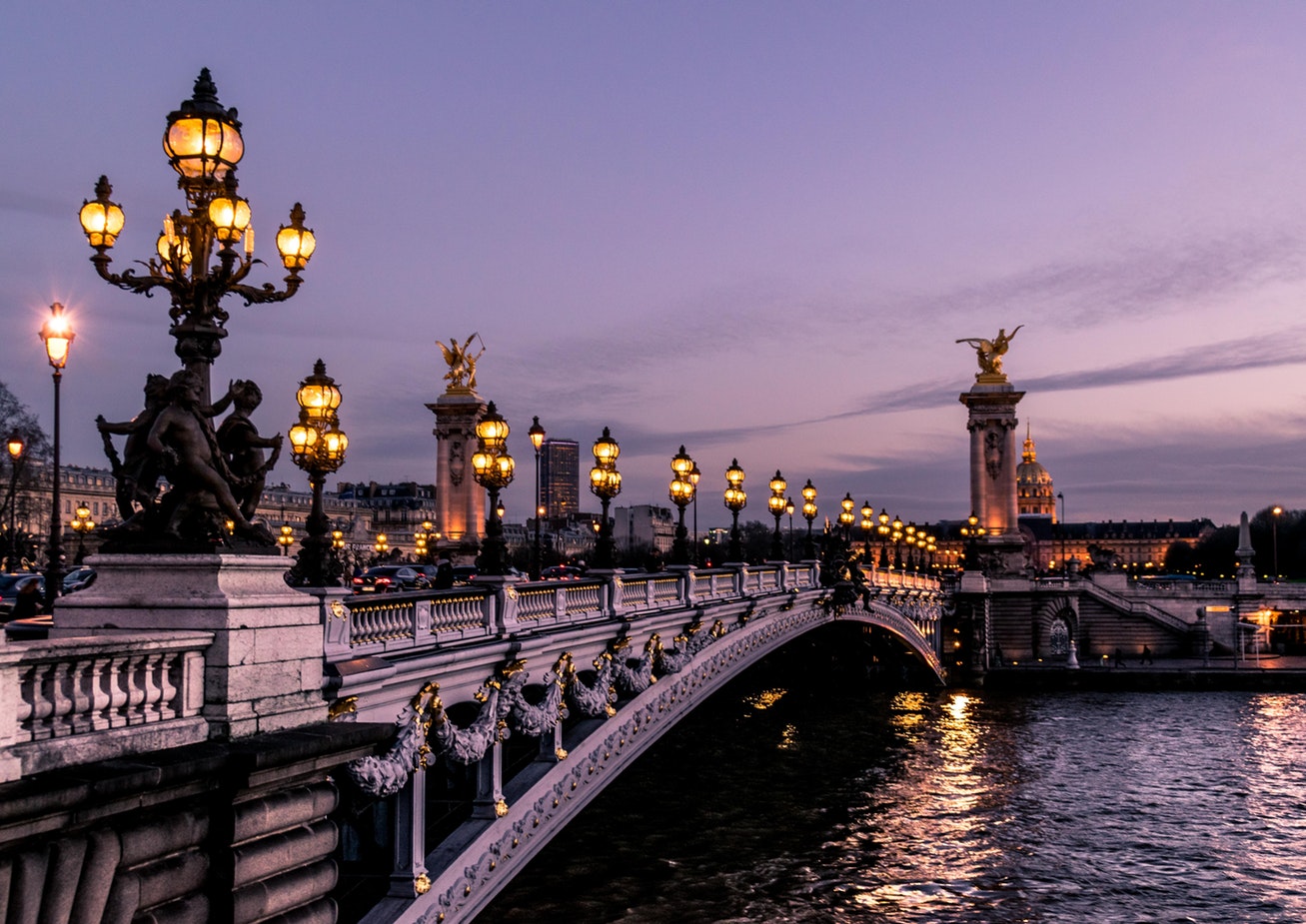
Paris at night. Google Images.

To play my interactive fiction game, “Lost in Paris,” click here.

To find out more about some stories behind Hemingway and Fitzgerald, check out this article about their first time meeting each other.

Shop, Shop, Shop

Even in the era of Amazon, one of my favorite things to do on a rainy weekend (or any day, if we’re being honest) includes making a stop at the mall to go window shopping. Ever since I was a kid, going to the mall and physically touching the clothes, trying them on, and planning all of the movie-like scenes I would star in while showcasing my brand new outfit (think Pretty Woman-esque) has been something that I cherish and is one of the reasons why I prefer “real-life” shopping over online shopping.

Julia Roberts in Pretty Woman. Credits: Touchstone Pictures, Silver Screen Partners IV, Regency International Pictures, Buena Vista Pictures.

But, if there’s one thing I have to admit, online shopping is easy. It’s convenient. And as much as I love going out and trying clothes on, nothing beats ordering chunky sweaters from the comfort of my own couch on a cold, snowy day.

In a world filled with wanting interactivity, though, online shopping can run into a problem – how can they get their consumers to still feel like they are a part of the shopping process many love?

This is where technology steps in. By introducing virtual “try-ons,” consumers can now interact with the products even if they aren’t physically trying them on. Places like LensCrafters allow you to download an app to try on a whole slew of frames – all in an instant, and more important, for free! In the beauty world, makeup leaders, such as Sephora and Maybelline, also have incorporated virtual makeovers, which allows buyers to “try-on” their makeup before buying it.

While I’m not entirely sold on the idea of a virtual makeover, since makeup is not only about how it looks on you, but how it also feels on you, the idea is still revolutionary when thinking about the history of shopping in general. And I can only imagine what the future holds in store, but I am definitely hoping that someone figures out Cher’s closet from Clueless – it is the 21st Century, after all.

An American Story

In high school, I visited New York City during the time when the original cast of Hamilton was performing on Broadway. Now, I unfortunately did not have the funds or luck to obtain Hamilton tickets (it’s pretty hard for a 17-year-old to afford Hamilton tickets in NYC), but I had listened to the soundtrack on repeat and knew that the musical Lin-Manuel Miranda created was something to go down in the history books.

Lin-Manuel Miranda as Alexander Hamilton. Photo: Joan Marcus

I will admit, I knew little to nothing about Alexander Hamilton before Miranda’s smash-hit musical. One of the most surprising facts about Hamilton that I learned was that he, among many other things, was an immigrant, born and raised on a tiny island in the Caribbean. A Revolutionary War veteran , a Founding Father, and our country’s first Treasury Secretary…and he wasn’t even born in the country that he fought for its independence.

There are a lot of things to take from Hamilton’s story, but the one that I found most important was the idea that the origin of one’s birthplace should not be the thing that deters people from having the best chances to, as Hamilton’s character calls it, “rise up” beyond their station in life.

That idea, and this musical in general, was the basis for my remix project in my Writing for Digital Media class. Our assignment was to make a compilation of audio, video, photos, or texts that were not ours; in a sense, we were to “plagiarize” the works of others to create a new one of our own (we needed to give credit to everything we “stole,” and what we’re using our “stolen” works for constitutes a fair-use of any copyrighted material).

So for my project, I started thinking about the things that I loved, and one of the first things that popped into my mind was the musical I listen to at least once a week, if not more – Hamilton! And if there’s one thing that comes close to my love for Hamilton, it’s The Hamilton Remix soundtrack, especially the song, “Immigrants: We Get The Job Done.” That song completely encapsulates the reality of our current societal battles about immigration in the United States while also including the one of the most creative lines found in “Yorktown (The World Turned Upside Down)” from the original Hamilton musical soundtrack. A remix song being used for my remix project? Seemed like a match made in heaven to me.

Then I started to think, “Well, Hamilton is an extremely famous immigrant who came to America and made an impact…I wonder how many others are like him too?”

And the results were astonishing. Albert Einstein, Joseph Pulitzer, Levi Strauss: all of these people (and trust me, thousands more) weren’t born in America–but they came to America to make a new life for themselves and to make a difference that they might not have had back home. I then took to researching more and more of some of the most famous immigrants to make the case that if we had turned them away when they came over, what would our country, our society, or even our world look like?

So, after I came up with a list of immigrants I wanted to display in my remix video, I searched their pictures, noted the credits, and took to Wikipedia for the origins of their birth. After gathering this information, I downloaded iMovie to mash together everything that I had. I think that a video for this project was the best medium I could have used, especially because I wanted to have “Immigrants: We Get The Job Done” playing in the background.

Navigating iMovie took a few tries to fully understand how to put all of my pieces together, but after using it for so long, it became extremely easy to finesse the many moving parts. The last thing that I wanted to add to my remix included a video of a 21st century-take on the importance of immigrants – and this came from President Barack Obama, who, in his 2014 prime time immigration speech, truly encapsulated the overall argument I wanted my video to share.

This project really made me realize that while many Americans want immigrants to come to America legally, the idea of completely shutting off immigrants from entering would severely hurt our country–a country that, all too often, forgets that it was once founded by immigrants – by people who, like the rest of us, had a dream.

To view my remix video, “We Get The Job Done,” check out the video below:

(Re)mix

This past summer, I took a trip down to Pittsburgh to visit the Andy Warhol Museum. This art museum, dedicated to the infamous artist known for being a tour de force in the pop art scene, had been on my bucket list of Pittsburgh museums to visit, and it did not disappoint.

While traversing the seven floors of Warhol’s artistic life, certain pieces really popped (pun intended) out to me, especially after recently completing a survey course in my art history class that included a few prominent Warhol pieces.

Botticelli’s Birth of Venus, c.1484-86. Uffizi Gallery, Florence, Italy.

What I didn’t expect to find amidst all of the 1960’s-80’s art included a Warhol original remix edition of Botticelli’s renaissance classic painting, Birth of Venus. Gone was her golden hair, the idyllic coastline, or the mythological figures floating around Venus that I critiqued in many art history essays; instead, Warhol focused just on her face, transformed her gilded hair into a new kind of a colorful masterpiece, and then repeated this print over. And over. And over again.

Andy Warhol, Details of Renaissance Paintings (Botticelli, Birth of Venus, 1484-86), 1984. The Andy Warhol Museum, Pittsburgh, PA.

The question that I had, and that I’m sure you’re all having, is why? Why did Warhol, and many other artists, deliberately chose to incorporate paintings or prints from the past (or their present) and re-purpose them for their own artistic uses?

Simply put, these artists, especially Warhol, picked infamous images and collected them together to make sense of the world around them. By going back to classical antiquity with Venus, or by infusing culturally-known products, such as Campbell’s Soup, into his works, Warhol essentially was making a commentary about the society he knew in the one way he know how–through his art.

Altogether, the art world, to a certain extent, is known for drawing inspiration from others–and this is something that is celebrated! Learning about the connections certain artists had to one another, and seeing those features in the other’s artwork, adds another layer of depth and appreciation to the piece as a whole–something that, when done right, can make art even more beautiful and important to society.

Locations of Love

I remember going to craft fairs as a kid and seeing the pieces of paper that had the meaning of your name, its origin, and a little “fun fact” printed in a beautiful, fancy script. Mine went a little something like this:

Brianna. Origin: Celtic. Feminine of Brian. Meaning: Strong.

Falls in love at the drop of a hat!

Whoever ran the booth at that fair knew me much better than I did, for I remember seeing this, scoffing, and thinking to myself, “Ha! As if. Love is gross!”

Ah, to be 10-years-old again.

Little did I know, falling in love at the drop of a hat would be something that I would do constantly in my teenage years (and now), but not just with people. Books, food, movies, and most importantly, places, are all things that I instantly can find a connection with.

So, in my Writing for Digital Media class, our assignment was to “hack” a Web 2.0 site and to insert a narrative into said site that normally wouldn’t be there. As I thought of what site I could possibly manipulate, and realizing that it was Valentine’s Day, the idea of love floated all around my head. When I started to think of the things I loved, though, I realized that the items coming to the top of my list were places, cities, or restaurants–all of them having a very special attachment to me in terms of love.

This is when I decided that Google Maps was my site to hack. The idea of physically mapping out places of love really stuck with me, and instead of filling the map with my personal places of love, I wanted to get a broader scope and to collaborate with others; hearing other people’s stories felt, to me, much more powerful and interesting. And thus, “Locations of Love” was born.

The only thing left to do at that point was to collect the stories! I learned how to create a Google Forms document, which laid out the general idea of what my project was and emphasized the fact that all of the responses would be anonymous–even I wouldn’t know who wrote what.

A capture of the intro to my Google Forms document.

I then posed the question, “What place holds the greatest connection to you in terms of love in the Johnstown/Altoona, PA area?,” never once expecting to become floored by the number of responses I received after only a few days. I shared the link to my Facebook, Twitter, Instagram, and Snapchat accounts, hoping to inform as many people as possible.

Once I received the responses, I opened up my map, searched the place, added it to the map, and copied/pasted the text right into the description section. Some of the locations were tricky to pin down, especially if they were a little bit off the beaten path, such as Devil’s Rock in Johnstown. With a few quick Google searches, however, finding the places turned out to not be a problem.

One issue I ran into was figuring out how to artistically make my place icons stand out from the others; for example, restaurants have an orange fork and knife symbol, shopping centers have a blue handbag, etc. Once I played with the settings and learned how to customize my icons with colors and shapes, I knew they would become easily recognizable, since magenta hearts seemed to be an icon not often used.

All in all, this project, and the way it tells love stories through a visual and interactive nature, is one that I really, truly believe is so different, powerful, and yet sentimental all at once. Reading all of the responses moved me in ways that I was not expecting, and it made me realize that, at the end of the day, people aren’t so different after all. And I think a large part of that comes down to love–a love that we share, value, and remember deeply.

Love: it’s something that eludes many, happens to most, and yet confounds us all. “Falling in love at the drop of a hat” seems like a derogatory statement, and it could be a phrase that a 10-year-old can easily resent, but the more that I live, I’m realizing that finding love, accepting love, and giving love are some of the greatest actions that people can foster–and are ones that people will remember most.

So here’s to love, and here’s to all of the ordinary and extraordinary places that we will find it in. “Locations of Love” is just a tiny fraction of all of the love in the world, but I think it’s a great reminder to see and know that love is here. It’s all around us. And I have a feeling that if you look, you’ll see it, too.

To access “Locations of Love,” simply zoom in on the map below and click on the pink hearts to read the place’s story.

Better Together

Glitzy dresses. A star-studded red carpet. An event that’s simply known as “The First Monday in May.” All of these things, and much, much more, culminate at the Metropolitan Museum of Art in New York City, but the Met Gala is the annual benefit that raises the funds necessary to sustain the Costume Institute.

Blake Lively arriving at the 2018 Met Gala.
Photo: Getty Images

So what does an exhibition look like at the Costume Institute? Part of the answer lies within the title: costumes! Dresses, suits, hats, shoes–all of the things that make the fashion world go ’round–are curated to fit the exhibition of that year. But what’s so interesting about the Costume Institute includes the plethora of clothes collected in their inventory from famous designers throughout the ages.

One thing is important to note, however: none of the clothes in the Costume Institute would be there if not for the collaborations and donations from fashion houses, private collectors, and even historic places like the Vatican, which graciously allowed several papal robes, crowns, and other accessories to go on view for the 2018 exhibition, “Heavenly Bodies: Fashion and the Catholic Imagination.”

Collaborations like these can be considered contributory, meaning that the people giving their content (or in this situation, their clothes) are aware of what The Met is asking of them, but they aren’t quite sure of when they’ll go on display, hence the reason why all of the articles in the Costume Institute go under a strict packaging and storing process to ensure that the clothes themselves won’t become damaged or destroyed.

Even more impressive is the use of technology to help keep the clothes alive in a digital format. With digital composite scans, The Met now has access to photographs that highlight the intense detail and fabrics that these clothes/works of art all have.

Digital scans of a few pieces from “Heavenly Bodies: Fashion and the Catholic Imagination.”
Photo: The Met

While there’s an obvious collaboration between designers and the Costume Institute, I think it’s fair to say that there’s also a collaboration between art and technology–a pair that, when done right, works better together.

For an all-access, inside look at the Costume Institute, check out this article from Vogue.

Hacking the Print Industry

In the digital world, “hacking” occurs nearly every day. Either for security reasons, personal vendettas, or for enjoyment, breaching computer information systems (and more) is something that is not an extraordinary event in our world today.

When it comes to the literary world, though, how does one “hack it?” This is where creative thinking comes into play, and the most perfect example that explores hacking as a literary form comes from David Levithan’s novel The Lover’s Dictionary.

Levithan takes readers through a story about a rocky relationship, and in doing so, he hacks a different type of literary form: the dictionary. We all know what to expect when cracking open a dictionary (or, uh, searching Google): the word, the part of speech, and the definition are all listed alphabetically. In his book, Levithan inserts his non-linear stories into the definition section, and deletes the actual meaning of the word. As readers, we’re to interpret each scenario as what the word means, which, in a sense, adds it’s own personal definition.

When first reading this book, I did not expect to find a story in lieu of these definitions, but I knew that something special and completely new to me was right before me eyes. Each definition is like a clue; thanks to the non-linear timeline, you’re reading about this relationship while being exposed to the end of it in the very beginning.

I’ve never heard of or read a book that was anything but the stereotypical chapters and pages that I’m accustomed to. The ingenious hacking on Levithan’s part brought to light the idea that stories can be found everywhere–even in places as banal as a dictionary.

Check out some of the entries from The Lover’s Dictionary here.

Stayin’ Alive

In a world that is becoming more and more focused on the digital side of life, the joys of opening up a book, hurriedly flipping a page to get to the next chapter, or even walking into a cozy bookstore are all aspects that are thought to waver in comparison to the sleek and thin computer. How are books, their contents, and artworks of all kinds staking their claim amidst all of this?

One simple answer includes the use of a platform that people love, hate, and talk about constantly: social media. Social media, no matter one’s opinion on it, cannot be denied the fact that it quickly sends information to large audiences within seconds. Publishing companies, booksellers, and museums are aware of this, and their social media accounts reflect the pursuit of getting literature and art into people’s news feeds–and inherently into their lives as well.

Here are some examples of a few standout social media pages from the Humanities world that I can’t get enough of:

  • @SparkNotes on Twitter. While SparkNotes.com is a great resource to supplement (and not to replace) readings, their Twitter feed is full of the greatest jokes, memes, and everything in-between. Come here for some of the funniest literary jokes imaginable!
  • @BNBuzz on Twitter. Barnes & Noble, the largest book retailer in America, showcases on their social medias quotes, fun facts, and sketches from recognizable and infamous authors. One of my favorite features that they have includes “On This Day,” which displays a famous literary quote on the author’s birthday.
  • @metmuseum on Instagram. Similar to B&N, The Metropolitan Museum of Art also posts several #onthisday pictures/videos, but something that also gets people to interact with The Met’s artwork collection occurs on their Stories. Each week, The Met uses the Stories function as a guessing game; they test their followers with true/false questions about a piece in a certain collection being featured that week. Simple in design, this is an interaction that both teaches and entertains followers.

View this post on Instagram

“I approach painting in the same way one approaches drawing; that is, it’s direct. I don’t work from drawings.”—Jackson Pollock⁣⁣ ⁣ Jackson Pollock was born on this day in 1912. A legendary figure in the history of modern art, Pollock was a leading practitioner of gesture painting, a branch of the avant-garde movement known as Abstract Expressionism. In 1947, he developed a radical new technique of pouring and dripping thinned paint onto raw canvas laid on the ground. Visit “Epic Abstraction: Pollock to Herrera” and see a gallery featuring highlights from The Met collection of Pollock’s work. #MetEpicAbstraction #JacksonPollock #TheMet⁣⁣ ____⁣⁣ Artwork: Jackson Pollock (American, 1912–1956). Autumn Rhythm (Number 30), 1950. Enamel on canvas. © 2019 Artists Rights Society (ARS), New York

A post shared by The Met (@metmuseum) on

All of these accounts, while being similar in their field of study, incorporate different tactics to reign in followers to the literature and art side of the Internet. Whether through memes, quotes, or games, one thing is for certain: books and art won’t be going anywhere soon.